 Georgia
Ajapsandal
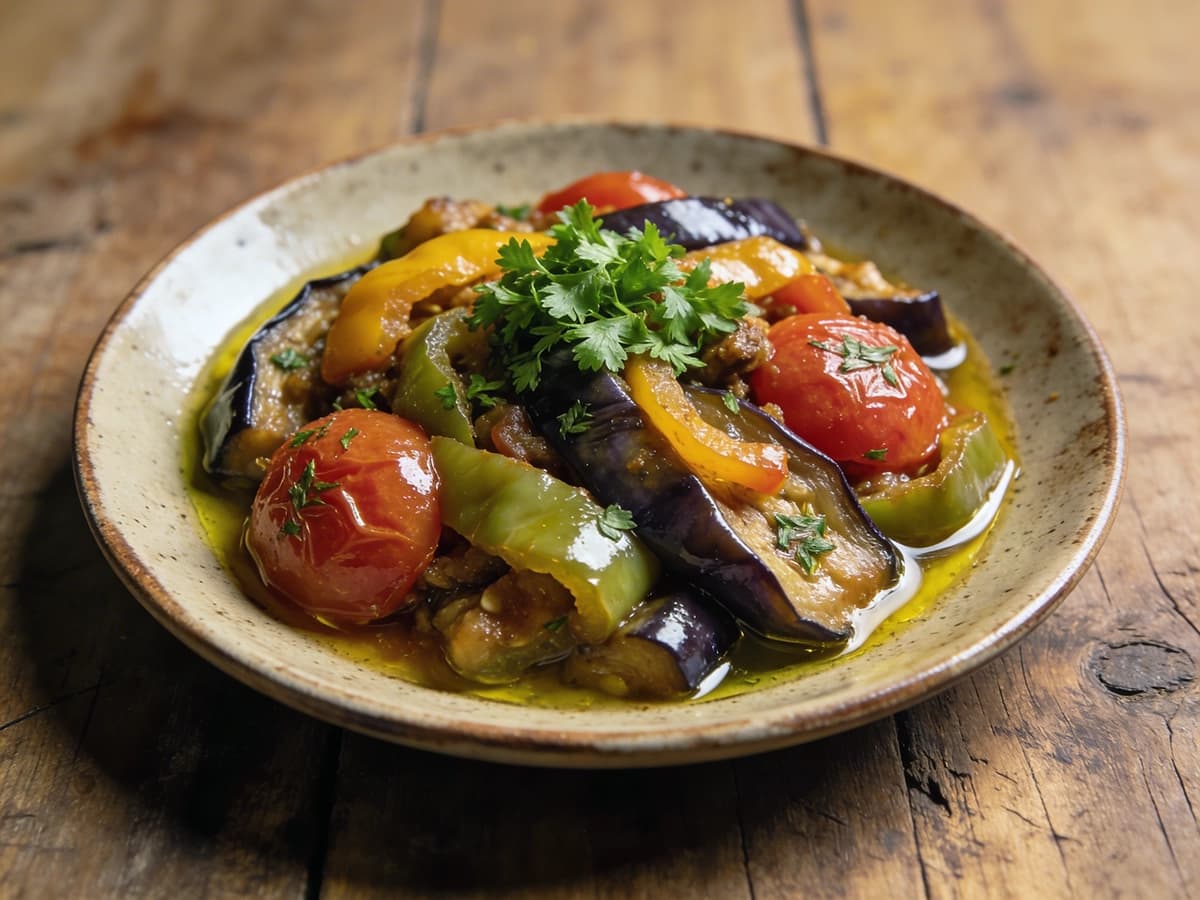
Adzhapsandali is a traditional Caucasian dish — a flavorful stew of eggplants, tomatoes and peppers, seasoned with fresh herbs and spices. Ideal both as a cold appetizer and a hot main course.
What you'll need
Ingredients
- 3 mediumSee recipes with eggplants
eggplants (about 700-800 g)
i - 2 largeSee recipes with bell peppers
bell peppers (one red, one green or yellow)
i - 4-5See recipes with ripe
ripe, juicy tomatoes
i - 2 mediumSee recipes with onions
onions
i - 2-3 mediumSee recipes with potatoes
potatoes (optional, for a heartier version)
i - 1See recipes with hot pepper
hot pepper (chili or jalapeño), optional
i - 4-5 clovesSee recipes with garlic
garlic, minced
i - 1 large bunchSee recipes with fresh cilantro
fresh cilantro
i - 1 large bunchSee recipes with fresh basil
fresh basil
i - a few sprigsSee recipes with fresh parsley
fresh parsley
i - 100 mlSee recipes with vegetable or olive oil
vegetable or olive oil
i - to tasteSee recipes with salt and freshly ground black pepper
salt and freshly ground black pepper
i


How to make it
Instructions
- 1
Dice the eggplants into large cubes (about 2-3 cm). Sprinkle with salt and let sit in a colander for 20-30 minutes to draw out bitterness. Rinse and pat dry. Core and seed the bell peppers and cut into large pieces. Dice the onions. Peel and dice the potatoes (if using). Peel the tomatoes and dice them. Finely chop all fresh herbs and the hot pepper.
- 2
In a large heavy-bottomed pot, heat half the oil over medium-high heat. Fry the eggplants in batches until golden brown on all sides. Remove and set aside. Add the remaining oil, sauté the onions until soft, about 5-7 minutes. Add the bell peppers and potatoes (if using) and cook for another 5 minutes.
- 3
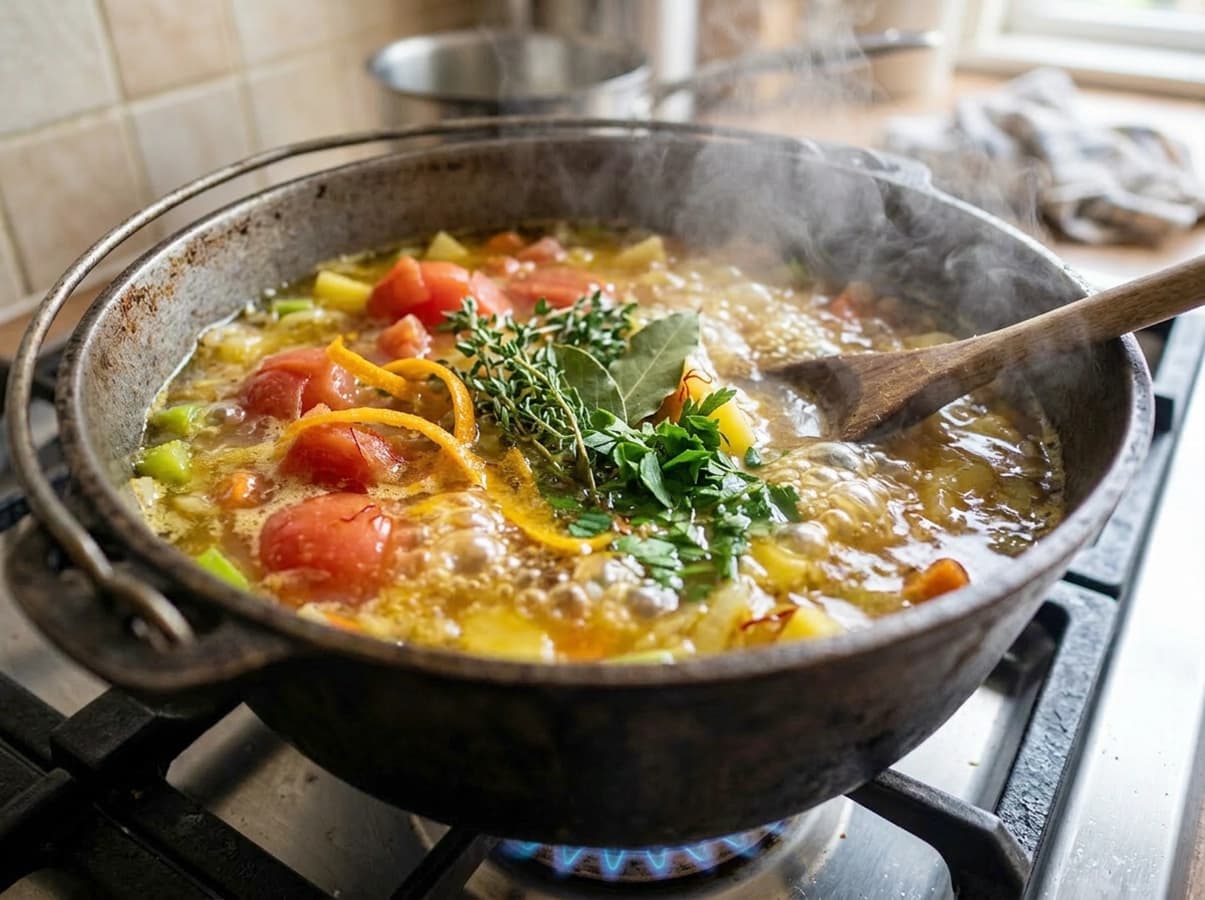
Add the diced tomatoes. Bring to a simmer and cook for 10 minutes until the tomatoes break down and form a sauce. Gently return the fried eggplants to the pot. Add the minced garlic, hot pepper, salt and black pepper. Stir carefully to combine.
- 4
Reduce heat to low, cover and let the stew simmer for 20-25 minutes until all vegetables are tender but still hold their shape. Remove from heat. Stir in the chopped fresh cilantro, basil and parsley.
- 5
Cover the pot again and let the ajapsandali rest for at least 15-20 minutes before serving. Serve hot or cold, sprinkled with additional fresh herbs. Goes well with pita bread or fresh bread.
Frequently Asked Questions
Do you need to salt eggplants before making ajapsandal?
If the eggplants are young and small — no need. Larger, older ones are worth salting for 20–30 minutes to draw out bitterness. Rinse and pat dry afterwards. Modern varieties have had most of the bitterness bred out, so this step is often skipped.
What is the difference between ajapsandal and ratatouille?
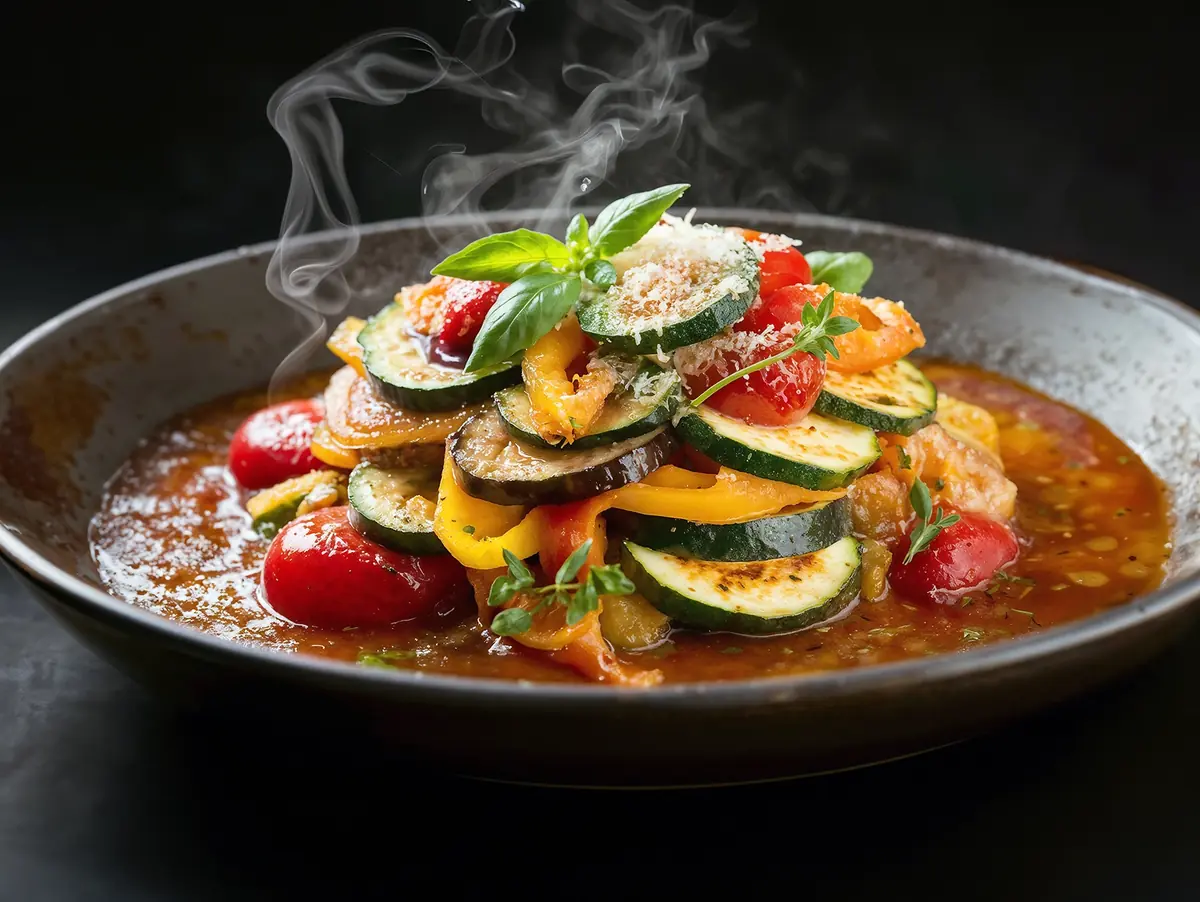
Both are stewed vegetables, but ajapsandal is always more aromatic and spicier thanks to coriander, basil and garlic. Ratatouille is a French classic with a neutral herby flavour (thyme, oregano). Ajapsandal is served as a hot main dish or cold appetiser; ratatouille is more often a hot side dish.
Can you make ajapsandal without eggplant — what can you substitute?
Eggplant is the base of the dish, but it can be partially replaced with courgette or zucchini. The texture will be more delicate and the flavour milder. Some make ajapsandal with just peppers and tomatoes — also delicious, but a different dish. The potato in the recipe is optional and makes it more filling.
Is ajapsandal a hot dish or a cold appetiser?
Both are correct. Served hot, it works as a main vegetarian dish or a side to meat. Served cold, it's an appetiser or salad. Many feel it tastes even better the next day from the fridge — the flavours have time to meld together.
How to stop eggplants from turning to mush when stewing ajapsandal?
Don't cut the eggplants too small and don't stew too long. First fry each vegetable separately over high heat until lightly golden — this seals the structure. Then stew everything together for no more than 10–15 minutes over low heat.
 Italy
Italy


 France

 Austria
 Mexico
 USA
USA



Join the conversation
Comments
Loading comments…